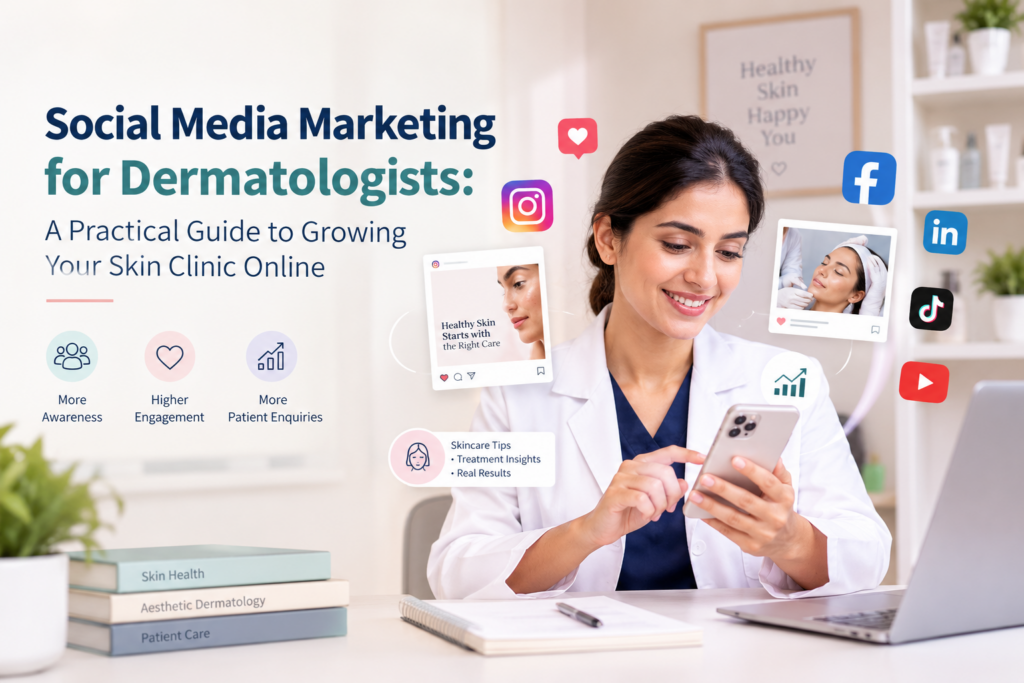
If you’re a skin doctor in Mumbai or Thane wondering why your clinic isn’t getting the online visibility it deserves, you’re not alone. Social media marketing for dermatologists has quietly become one of the most effective ways to attract new patients, build trust, and stand out in a crowded market. Patients today research their doctor’s Instagram before they even call for an appointment, and if your profile looks outdated or inactive, that appointment might go to someone else.
This guide breaks down exactly how dermatologists and skin clinics can use social media the right way, without sounding salesy, without violating medical advertising norms, and without wasting hours on content that doesn’t convert.
Dermatology is a visual specialty. Before-and-after results, skin conditions, and treatment outcomes are naturally suited to platforms like Instagram and Facebook. That’s exactly why patients expect to see your work before they trust it.
A dentist can rely on word-of-mouth for a while. A dermatologist competing in a dense market like Mumbai or Thane usually can’t, not when three other skin clinics are within a five-kilometre radius, each running ads and posting content daily.
Here’s the real shift: patients no longer search only on Google. Many now discover skin specialists through Instagram Reels, Facebook groups, or even YouTube Shorts, then verify credibility through Google reviews. Missing from any one of these touchpoints means missing patients.
Instagram marketing for dermatologists works best when it feels educational first, promotional second. Patients follow dermatology pages to learn about acne, pigmentation, hair fall, anti-ageing treatments, not to be sold to constantly.
A few formats that consistently perform well for skin clinics:
One thing many clinics get wrong: posting only promotional content. If every third post says “Book now,” followers tune out. A healthier mix is roughly 70% educational or engaging content, and 30% clinic updates, offers, or appointment reminders.
Should You Post Before-and-After Photos?
Yes, but carefully. Always get written patient consent, avoid misleading edits, and be transparent about the number of sessions or timeframe involved. This isn’t just an ethical requirement, it’s also what makes your content trustworthy rather than “salesy,” which matters a lot for EEAT and for patient confidence.
Consistency matters more than frequency. A clinic posting three well-thought-out posts a week will usually outperform one posting daily with rushed, repetitive content.
A simple weekly structure that works for most skin clinics:
This kind of calendar also helps with dermatologist social media marketing from a resourcing angle, your team knows what’s coming, and you’re not scrambling for ideas every morning.
Mumbai’s dermatology market has its own quirks. Humidity-related skin issues, pollution-driven pigmentation, and monsoon fungal infections are far more relevant to a Mumbai audience than generic “10 skincare tips” content copied from a global blog.
Clinics in Mumbai and Thane benefit hugely from hyperlocal content, think:
If you run clinics in both cities, don’t merge them into one generic feed. Patients from Thane want to know you understand their commute, their local pollution levels, even their preferred appointment timings. A little specificity goes a long way in building local trust.
Not every platform deserves equal effort. Here’s a realistic breakdown:
Trying to be active everywhere at once usually backfires. Most solo dermatologists and small clinics do better focusing deeply on one or two platforms rather than spreading thin across five.
Should you manage your own social media, or bring in help? It depends on your bandwidth and comfort with content creation.
DIY works well if:
Hiring a social media manager or agency works better if:
Whichever path you choose, one rule doesn’t change: medical accuracy has to be reviewed by the dermatologist, not left entirely to a marketing person unfamiliar with skin science. This is where a lot of clinics lose credibility, flashy content that gets basic facts wrong.
Here’s something worth thinking about: would you trust a doctor’s Instagram page more if it looked like a hospital brochure, or if it felt like a real person explaining things clearly?
Most patients lean toward the second. Authenticity, genuine explanations, honest answers to comments, occasional humour, builds far more trust than perfectly polished, overly corporate content.
A few habits that build long-term credibility:
A few patterns show up again and again across skin clinics:
Fixing even two or three of these can noticeably change how a clinic’s social presence performs.
Social media marketing for dermatologists isn’t about going viral, it’s about consistently showing up with useful, honest, well-explained content that makes patients comfortable enough to book an appointment. For clinics in Mumbai and Thane specifically, blending that consistency with genuinely local, relevant content is what separates a page that grows steadily from one that stalls after a few months.
Start small if you need to, one educational post a week is better than nothing. Build from there, keep the content honest, and let your expertise do the talking.
If you’re running a dermatology clinic and want to make your social media presence work harder for you, it’s worth reviewing what’s currently posted and asking: would a new patient trust this page enough to book a visit?
Three well-planned posts a week is a realistic starting point for most skin clinics. Consistency matters more than daily posting, especially when doing social media marketing for dermatology clinics with limited in-house resources.
Instagram tends to work better for visual, educational content and younger audiences, while Facebook still performs well for local ads targeting patients aged 35 and above. Many clinics use both, with slightly different content strategies for each.
Yes, as long as written patient consent is obtained and the results shown are accurate and not misleading. Transparency about the number of sessions and timeframe involved is essential for maintaining trust and complying with medical advertising norms.
It depends on your time and comfort level. Solo practitioners with a smaller patient base often manage well independently, while multi-doctor clinics usually benefit from dedicated social media management to maintain consistency.
Mumbai and Thane patients respond better to hyperlocal content, humidity-related skin issues, monsoon skin care, and pollution-driven concerns, rather than generic global skincare tips. Location-specific content builds stronger local trust and relevance.
We are a niche digital marketing agency helping dermatologists and skin clinics across Mumbai and Thane.