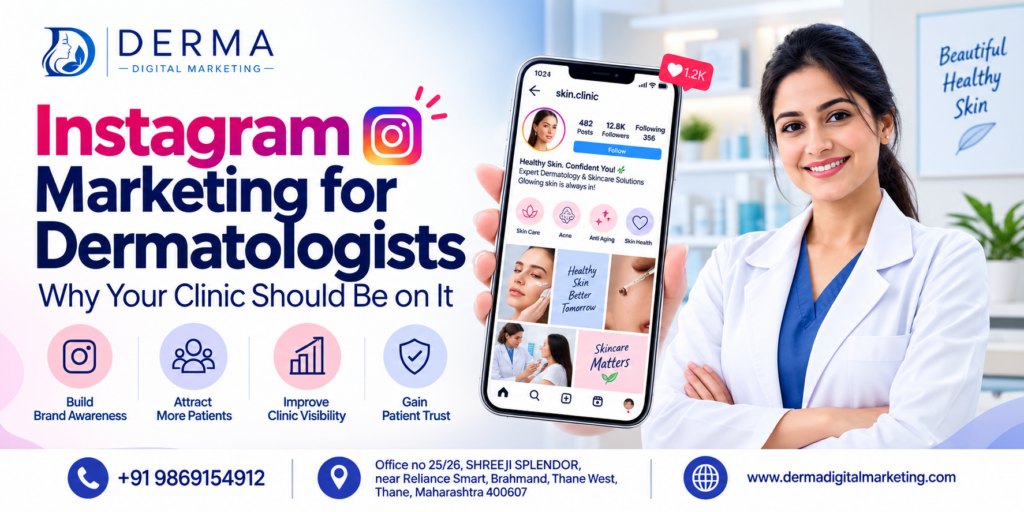
Skin concerns are personal, and most people research them long before they book an appointment. Today, a lot of that research happens on Instagram. That is why Instagram marketing for dermatologists has moved from a “nice to have” to a practical way of building trust with patients across Mumbai and Thane.
If you run a skin clinic, your next patient may already be scrolling through acne routines, laser reels, or pigmentation myths tonight. The real question is: will they find your voice among them, or someone else’s?
This guide explains why Instagram suits dermatology so well, what to post, and how to do it responsibly.
Dermatology is a visual specialty. Skin, hair, and nails are things people can see, compare, and worry about. Instagram is built around images and short videos, so the match is almost perfect.
Here is what makes the platform useful for a clinic:
For many clinics, Instagram for dermatologists is less about selling and more about being the trusted, reliable voice in a noisy space.
Choosing a dermatologist is a high-trust decision. Nobody wants to experiment with their face on a stranger.
When a patient watches you explain why sunscreen matters even indoors, or why squeezing pimples leaves marks, they begin to feel they know you. By the time they walk in, half the hesitation is gone.
Consistency matters here. Regular, honest posts signal that your clinic is active, current, and confident in its work. An account that has been silent for eight months tends to raise quiet doubts.
A strong dermatology clinic Instagram marketing plan mixes education, reassurance, and a little personality. Think of it as three buckets.
1. Educational content
This is the backbone of your account. Useful topics include:
Keep the language simple. If a patient needs a dictionary to follow your reel, they will scroll on.
2. Treatment explainers
Patients are often nervous about procedures. Short videos walking through what to expect, how long a session takes, and what recovery looks like can ease that anxiety.
Explain who a treatment is suitable for, and who it is not. Saying “this may not be right for everyone” builds more credibility than any promise.
3. Behind-the-scenes and clinic culture
Introduce your team, show the clinic environment, and share your approach to hygiene and consultation. These posts remove the “unknown” from visiting a clinic.
Not every format does the same job. A simple way to think about it:
You do not need to master everything at once. Start with one or two reels and one carousel a week, and build from there.
Local relevance is where Instagram quietly becomes a patient-acquisition tool. Mumbai and Thane are dense, busy, and competitive, and people often choose a clinic based on convenience as much as expertise.
Here is how to make your Instagram marketing for skin clinics work locally:
A patient in Thane who sees you explain monsoon fungal infections in plain language is far more likely to think of you when they have one.
This is where real experience matters. A medical practice is not a lifestyle brand, and patients notice the difference.
This approach protects your patients, your licence, and your reputation.
You do not need a big budget or a studio. Many successful clinic accounts begin with a phone and good natural light.
It also helps to treat Instagram as one part of a wider approach. Social media marketing for dermatologists works best alongside a solid Google Business Profile, an informative website, and genuine patient reviews. Each channel supports the others.
A few missteps come up again and again:
Ask yourself: if a stranger scrolled your last ten posts, would they feel informed and reassured, or sold to?
Instagram gives dermatologists something rare: a way to educate, reassure, and be visible to people who are actively thinking about their skin. Done thoughtfully, Instagram marketing for dermatologists helps patients feel they know you before they ever step into your clinic.
For practices in Mumbai and Thane, the opportunity is especially strong. Local content, honest education, and consistent presence can set you apart in a crowded market, without any aggressive selling.
Start small, stay ethical, and let your expertise lead. If you would like a hand shaping a content plan for your clinic, a simple conversation about your goals is a good first step.
Your profile’s performance section shows how patients find and interact with you. Review it monthly. Look at how many calls, direction requests, and website clicks you get, and which search terms bring people in. If calls are high but bookings are low, the issue may be in your phone handling rather than your profile.
A Google Business Profile is not a set-and-forget listing. For dermatologists, it is often the first impression a patient gets. Claim it, complete it honestly, gather genuine reviews, and update it regularly. Do that consistently and you’ll be easier to find and easier to trust.
If you run a practice in Mumbai or Thane and haven’t reviewed your profile in a while, this week is a good time to check your categories, hours, and photos. Small fixes often make a noticeable difference.
For most clinics, yes. Dermatology is visual and trust-driven, so Instagram lets you show expertise and personality before a patient visits. Results build gradually, so consistency matters more than quick wins.
Focus on education first: skin and hair concerns, myth-busting, ingredient explainers, and what to expect from treatments. Add behind-the-scenes content to help patients feel comfortable with your team and clinic.
Only with clear written consent from the patient, and in line with medical advertising rules in India. Avoid guarantees or exaggerated claims, and check current National Medical Commission guidance.
A realistic starting point is two to four posts a week, mixing reels and carousels, with regular stories. A sustainable schedule you can maintain beats a busy one you abandon.
It carries higher responsibility. Patients are making health decisions, so accuracy, consent, and ethical communication matter as much as creativity. Education and trust should come before promotion.
We are a niche digital marketing agency helping dermatologists and skin clinics across Mumbai and Thane.